MemoHoney prints a milligram figure beside every ingredient, which is rarer than it should be in this category and genuinely to the brand's credit. It also means the formula can be checked. Below is every ingredient, the amount on the label, the amount used in published human research, and what the gap between them means for you.
The short answer
Ten ingredients make up a 600 mg blend. Vitamin B6 is the only one delivered at a full, research-relevant amount. Bacopa is at about a third of its studied dose, Alpha-GPC at roughly a sixth, Lion's Mane and Acetyl-L-Carnitine at under 2%. The single largest ingredient by weight is Himalayan pink salt.
The MemoHoney ingredient table
| Ingredient | On the label | Used in research | Share |
|---|---|---|---|
| Himalayan Pink Salt | 120 mg | No established cognitive research dose | ~4% |
| Bacopa Monnieri Extract | 100 mg | 300 mg/day standardised extract | ~33% |
| Alpha-GPC (Choline) | 60 mg | 400–1,200 mg/day | ~15% |
| Green Tea Extract (60% EGCG) | 60 mg | 250–500 mg EGCG/day | ~14% |
| Lion's Mane Mushroom | 50 mg | 3,000 mg/day dried powder | ~2% |
| Bilberry Fruit Powder | 40 mg | 160–480 mg standardised extract | ~25% |
| Acetyl-L-Carnitine (ALCAR) | 22 mg | 1,500–3,000 mg/day | ~1% |
| Coleus Forskohlii Root | 20 mg | 250 mg twice daily (10% forskolin) | ~8% |
| Cinnamon Bark Extract | 17 mg | 500–2,000 mg/day | ~3% |
| Vitamin B6 (pyridoxine HCl) | 2 mg (119% DV) | 1.3–1.7 mg/day RDA | Full DV |
The 600 mg that is only 491 mg
Add the ten printed amounts: 120 + 100 + 60 + 60 + 50 + 40 + 22 + 20 + 17 + 2 = 491 milligrams. The panel declares the proprietary blend at 600 milligrams. That leaves roughly 109 mg — about 18% of the blend — with nothing beside it.
There are ordinary explanations. Carriers, anti-caking agents, flow agents and rounding all live in that space. The point is narrower than a conspiracy: a company willing to print ten specific figures could print the eleventh line too, and if you are paying $49 to $79 a bottle you are entitled to know what the last fifth of the blend is. Ask customer support before you order; a clear answer is a good sign, and a vague one is information as well.
Comparing MemoHoney bundles
The MemoHoney discount is applied by bundle size: $79 a bottle for two, $69 for three and $49 for six. Three bottles is the bundle that matches a fair 8-to-12-week trial while staying inside the 60-day guarantee.
Check MemoHoney Bundle Prices60-day money-back guarantee · official website checkout
Every ingredient, examined
1. Himalayan Pink Salt — 120 mg
Mineral salt providing sodium, chloride and trace minerals.
This is the single largest line on the panel — 120 mg, one fifth of the whole 600 mg blend. Pink salt is roughly 98% sodium chloride with trace minerals in amounts too small to matter nutritionally. There is no body of human research showing that added pink salt improves memory, recall or focus in people who already eat a normal diet. 120 mg of salt contributes roughly 47 mg of sodium, a small fraction of a day's intake, so it is neither a health risk at this amount nor a cognitive ingredient.
Worth knowing: Counts toward daily sodium if you have been told to restrict it. · American Heart Association on sodium
2. Bacopa Monnieri Extract — 100 mg
The best-evidenced memory herb in the formula.
Bacopa is the ingredient with the strongest human evidence for memory in this blend. Controlled trials generally use 300 mg a day of an extract standardised for bacosides, taken for 12 weeks before recall improvements appear. MemoHoney provides 100 mg, which is a third of that amount, and the panel does not state a bacoside percentage — so the active content cannot be calculated from the label alone.
Worth knowing: Commonly causes stomach upset if taken without food. · Bacopa memory trials on PubMed
3. Alpha-GPC (Choline) — 60 mg
A choline source used to make acetylcholine, the memory neurotransmitter.
Alpha-GPC is a well-absorbed choline compound, and choline is the raw material for acetylcholine, the signalling molecule most closely tied to learning and recall. Human studies of Alpha-GPC for cognition use 400 mg to 1,200 mg a day. MemoHoney contains 60 mg, around 15% of the lowest studied dose, so treat it as a contribution to daily choline intake rather than a replicated therapeutic dose.
Worth knowing: Headache and nausea are the usual complaints at higher doses. · Alpha-GPC cognition research
4. Green Tea Extract (60% EGCG) — 60 mg
Polyphenol antioxidant, studied alongside L-theanine for attention.
At 60% EGCG, the 60 mg of extract delivers roughly 36 mg of EGCG. Studies looking at green tea catechins and attention typically use 250 mg or more of EGCG, often paired with L-theanine, which is not in this formula. The dose here is closer to what a small cup of green tea provides than to a study dose.
Worth knowing: Concentrated green tea extract carries a rare liver signal at high doses; this amount is far below that range. · NCCIH green tea overview
5. Lion's Mane Mushroom — 50 mg
Culinary mushroom studied for nerve growth factor signalling.
The most cited human trial of Lion's Mane for cognition used 3,000 mg a day of dried fruiting body for sixteen weeks. MemoHoney's 50 mg is under 2% of that. The panel describes a polysaccharide fraction rather than plain powder, which makes a direct comparison imperfect, but no plausible concentration closes a sixtyfold gap.
Worth knowing: Rare allergic reactions in people sensitive to mushrooms. · Lion's Mane cognition studies
6. Bilberry Fruit Powder — 40 mg
Anthocyanin-rich berry associated with microcirculation and eye comfort.
Bilberry anthocyanins are the pigments behind most of its research, and studies use standardised extracts from 160 mg upward. MemoHoney lists 40 mg of fruit powder — powder, not extract — so the anthocyanin content is lower again than the milligram comparison suggests.
Worth knowing: May add to the effect of blood-thinning medication at high intakes. · Bilberry anthocyanin research
7. Acetyl-L-Carnitine (ALCAR) — 22 mg
Amino acid derivative involved in mitochondrial energy transport.
ALCAR has a genuine research literature in older adults, but the trials run at 1,500 mg to 3,000 mg a day, usually split across doses. At 22 mg, MemoHoney provides roughly 1.5% of the low end. This is the widest single gap on the panel after Lion's Mane.
Worth knowing: Can cause restlessness or a fishy body odour at study-level doses, not at this one. · ALCAR cognition literature
8. Coleus Forskohlii Root — 20 mg
Source of forskolin, a cyclic-AMP signalling compound.
Forskolin research generally uses 250 mg of a 10% standardised extract twice a day, and most of that work concerns body composition and eye pressure rather than memory. MemoHoney lists 20 mg of root powder with no forskolin percentage, so the active content is unknown from the label.
Worth knowing: Forskolin can lower blood pressure and interacts with blood thinners at study doses. · Forskolin research index
9. Cinnamon Bark Extract — 17 mg
Polyphenol spice studied mainly for glucose handling.
Cinnamon trials use 500 mg to 2,000 mg a day and measure blood sugar, not recall. The 17 mg here is the smallest botanical line on the panel and is best read as a flavour or formulation ingredient. The panel does not say whether it is cassia or Ceylon cinnamon, which matters because cassia carries coumarin.
Worth knowing: Cassia cinnamon contains coumarin, relevant only at far higher daily intakes. · NCCIH cinnamon fact sheet
10. Vitamin B6 (pyridoxine HCl) — 2 mg (119% DV)
Essential vitamin for neurotransmitter synthesis and homocysteine metabolism.
This is the one ingredient in MemoHoney delivered at a fully meaningful amount. At 2 mg it exceeds the adult Daily Value, and B6 genuinely is required to build serotonin, dopamine and GABA, and to keep homocysteine in range. If you are already B6-replete from food, extra B6 does not sharpen a healthy memory — the benefit is correcting a shortfall, not exceeding a normal level.
Worth knowing: Very high long-term B6 intakes (well above this dose) are linked to nerve symptoms. · NIH Office of Dietary Supplements: Vitamin B6
What the pattern tells you
Read down the table and a shape appears. The ingredients with the strongest cognitive research — Bacopa, Alpha-GPC, Lion's Mane, ALCAR — are all present below their studied doses, some far below. The ingredient present in the largest amount, pink salt, has no cognitive research at all. The only line delivering a complete, research-relevant amount is Vitamin B6, which costs almost nothing and does its job mainly by correcting a shortfall rather than by exceeding a normal level.
That is not a scandal; it describes most of this category. It does set expectations. If you buy MemoHoney expecting the effect sizes reported in the Bacopa literature, you have bought a third of the dose used to produce them. If you buy it as a modest daily top-up of choline, B6, polyphenols and a well-studied memory herb, the label supports that reading exactly.
Allergens, sensitivities and interactions
- Mushroom sensitivity: Lion's Mane is a mushroom — relevant if you react to fungi.
- Blood thinners: bilberry and forskolin can add to anticoagulant effects; the amounts here are small, but tell your pharmacist.
- Blood pressure medication: forskolin can lower blood pressure.
- Diabetes medication: cinnamon and green tea can nudge glucose handling.
- Sodium restriction: 120 mg of pink salt adds roughly 47 mg of sodium a day.
- Caffeine sensitivity: not an issue — green tea extract at 60 mg contributes a negligible amount.
Read how these ingredients work together, or see the benefits the formula can reasonably support.
Frequently asked questions
What are the ingredients in MemoHoney?
Himalayan pink salt 120 mg, Bacopa Monnieri 100 mg, Alpha-GPC 60 mg, green tea extract (60% EGCG) 60 mg, Lion's Mane 50 mg, bilberry 40 mg, Acetyl-L-Carnitine 22 mg, coleus forskohlii 20 mg, cinnamon bark 17 mg and Vitamin B6 2 mg.
Are the MemoHoney doses high enough to work?
Only Vitamin B6 is at a full research-relevant dose. Bacopa is at about a third of its studied amount, Alpha-GPC around a sixth, and Lion's Mane and Acetyl-L-Carnitine under 2%.
Why is salt the biggest ingredient in MemoHoney?
The label lists Himalayan pink salt at 120 mg, a fifth of the blend. It contributes trace minerals and about 47 mg of sodium. It is harmless at that amount and it is not a cognitive ingredient.
Does MemoHoney contain allergens?
Lion's Mane is a mushroom, which matters if you are sensitive to fungi. Check the full panel on your bottle for manufacturing allergen statements.
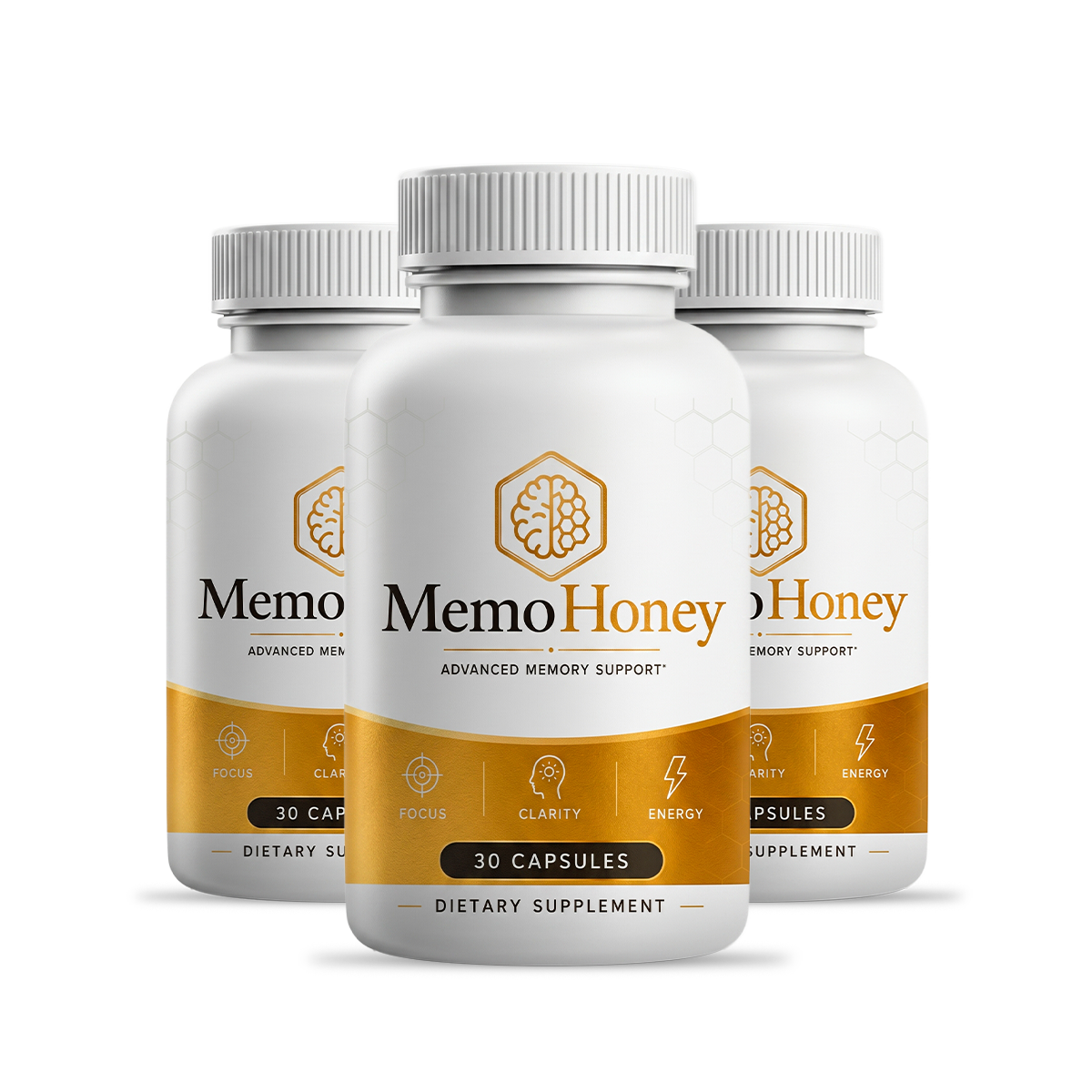
MemoHoney Official Website
per bottle on the 6-bottle bundle · 60-day money-back guarantee
Check Current Price Sold through the official checkout only